Kakao Releases Kanana-2-v-decide, an Open-Weight Multimodal Decision Model
Kakao has released Kanana-2-v-decide-3b-2611 on Hugging Face, a 3.67B-parameter multimodal model that outputs probabilities, choices, or scores rather than text, under the Kanana Open License.


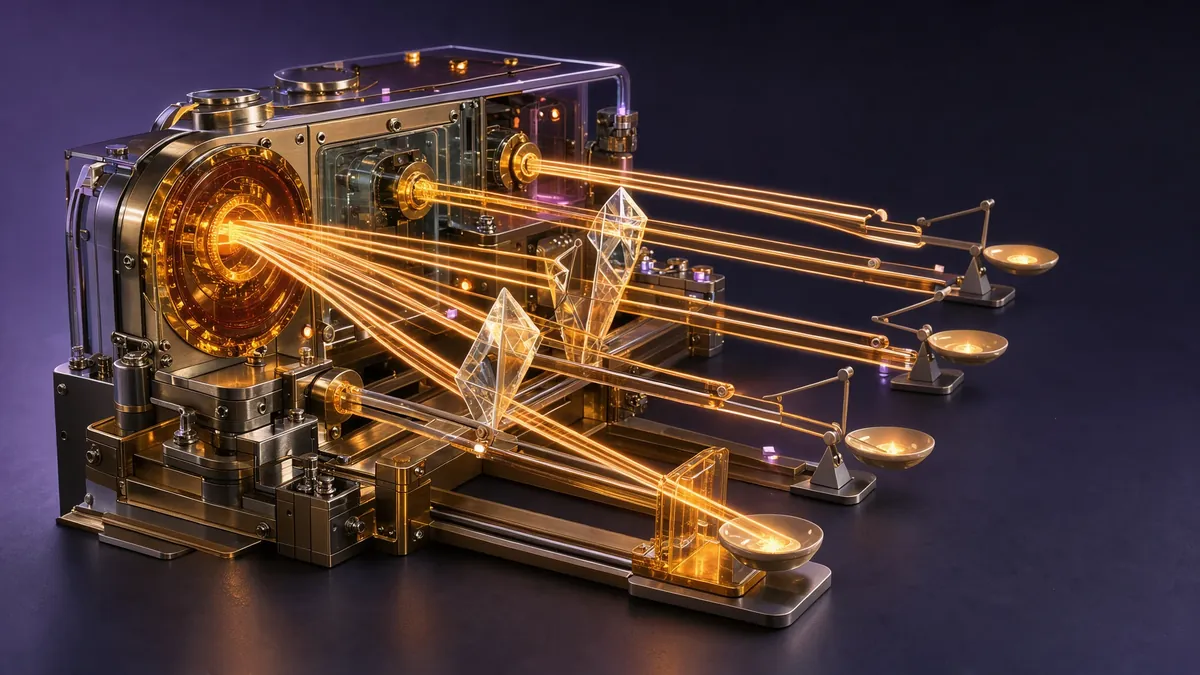
Kakao released Kanana-2-v-decide on November 6, 2026, a multimodal model designed for agent decision-making rather than text generation. Both the corporate press release and the Hugging Face model card confirm the release of the weights under the identifier kakaocorp/kanana-2-v-decide-3b-2611.
No Sentences, Just a Distribution
Where a standard LLM responds in natural language, Kanana-2-v-decide answers in a structured format. Given a state (text, JSON, chat history, and optionally images), the model handles typed questions and returns:
- choice: probabilities across multiple options and the selected option;
- noul: the probability that a condition is true;
- score: a rating on an ordered scale.
According to the model card, it features 3.67 billion parameters (0.49B vision + 3.18B language), supports up to 10 images, and accommodates a context window of up to 20,480 tokens. The described architecture encodes the state and each candidate into embeddings (2,560 dimensions) and then applies a softmax over cosine similarities—hence the absence of text generation.
Licensing and Its Role in the Kanana Family
The model is built upon Kanana-2-v-3b. It is released under the Kanana Open License: Kakao presents it as usable for both research and commercial purposes, subject to specific conditions (notices, “Powered by Kanana” attribution, compliance with Responsible AI guidelines). It is not an Apache 2.0 license: reviewing the LICENSE file is recommended before deploying the checkpoint into production.
Kakao draws parallels to Jev (TypeSafe AI) in its press release, while the Hugging Face model card categorizes it among “System One” compatible decision models. The stated objective: speed up an agent’s micro-decisions (next tool selection, ticket routing, analyzing a product photo) without the overhead of generating text and then running a parser.
Kakao’s Claims
On an H200 GPU, Kakao reports an average latency of under 0.04 s, framed as approximately 43 times faster than GPT-6 Luna. In its benchmarks, the model scores 72.50 on the Kanana Decision Bench (an internal Korean benchmark of 15,909 questions) and an average of 61.23 on the public Decision Index and Decision Index Vision, ahead of several models compared in the card. These figures remain vendor-provided.
Our take
Kanana-2-v-decide addresses a real agent engineering challenge: turning an assessment into reliable JSON without having to generate and subsequently parse a sentence. At 3.67B parameters and under an open license (with stipulations), it stands as a solid option for tool routing and multimodal classification—especially for Korean-language tasks, where Kakao highlights its Decision Bench. Two caveats to keep in mind: the license is not a standard permissive Apache-style license, and the latency and performance benchmarks originate directly from the developer. For teams already orchestrating agents, the real test is practical: swap out an LLM classification call for this checkpoint and measure production error rates, rather than relying solely on Decision Index scores.
Sources
- Kakao — Kanana-2-v-decide press release (November 6, 2026) Primary source
- Hugging Face — Kanana-2-v-decide collection Primary source
- Hugging Face — kakaocorp/kanana-2-v-decide-3b-2611 Primary source
- Kanana Open License (repository LICENSE file) Primary source
A primary source comes directly from the company, lab or organization concerned. A secondary source reports the information without being its author: we flag it as such. Spotted an error? See our corrections policy.