OpenAI Launches GPT-Rosalind-6: GPT-6 Astra Weights for Biology, Restricted to Approved Organizations
On October 30, OpenAI released the system card addendum for GPT-Rosalind-6, its model for biology and drug discovery. It uses the exact weights of GPT-6 Astra without retraining, reduces refusals on dual-use biological queries, and is accessible only to approved organizations.

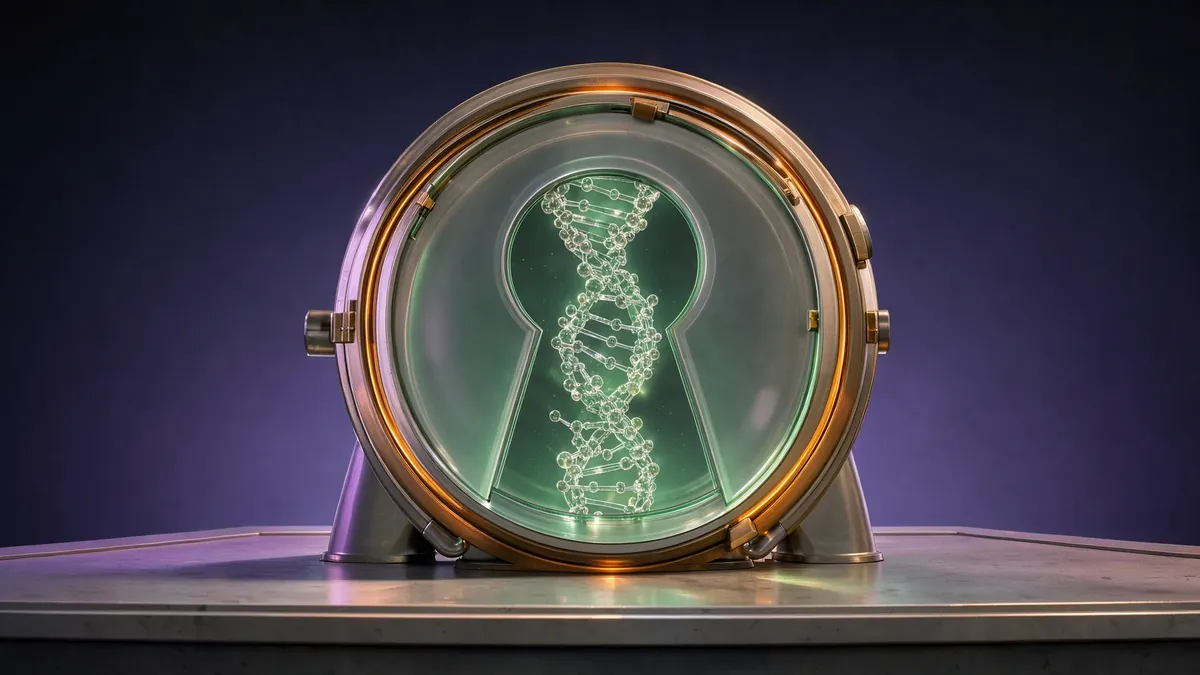
OpenAI published the system card addendum for GPT-Rosalind-6 on October 30, 2026, marking the newest release in its family of models dedicated to biology, drug discovery, and translational medicine. What sets it apart: the model uses the exact same weights as GPT-6 Astra, its flagship reasoning model, without any additional data or post-training. What changes are the access rules and its behavior when handling sensitive questions.
The Same Model, Different Rules
GPT-Rosalind-6 is offered under the name GPT-Rosalind-6 Research (the Help Center refers to it as “GPT-6 Rosalind Research”) to pre-approved scientists, research institutes, companies, and public partners. OpenAI reviews each applicant’s intended use, governance, and safety controls. In return, the model refuses less often when dealing with dual-use biological questions—queries useful for legitimate research but carrying misuse risks—which GPT-6 Astra sometimes rejects in general access. It continues to refuse any assistance with biological weaponization and enforces a more conservative refusal boundary for cybersecurity than the base model.
OpenAI’s Help Center specifies the scope: GPT-6 Rosalind Research is restricted to a limited number of organizations at the Research access tier, within Work and Codex, and via the API upon separate approval, but not in ChatGPT’s Chat tab. In Enterprise workspaces, it starts with a two-week admin preview, disabled by default. The broader Discovery tier remains on Rosalind 5.5, and approval for Discovery does not grant access to version 6. Customers must also have model outputs reviewed by a qualified person before they inform experiments, publications, or major decisions.
Claimed Progress, Acknowledged Risk
Across three life sciences research benchmarks, OpenAI reports sharp improvements over GPT-Rosalind-5.5: 49.6% vs. 28.9% in medicinal chemistry (MedChemBench v7), 37.7% vs. 16.7% in genomics (GeneBench Pro v13), and 61.3% vs. 44.0% on researcher-submitted tasks (LifeSciBench Gold). These metrics were measured internally by OpenAI.
On the risk side, OpenAI classifies the release as having “High” capability in the biological and chemical domain, remaining below the “Critical” threshold: the model clears indicative “High” thresholds on three out of four wet-lab knowledge benchmarks after refusal correction, but none of the four biological design evaluations reaches the “Critical” threshold. For cybersecurity, it carries over GPT-6 Astra’s evaluation and treats the model as “Critical.” The refusal rate on the biorisk knowledge benchmark drops to 9.4%, compared to 29.2% for GPT-6 Astra.
What Remains to Be Verified
No independent performance evaluation has been published. OpenAI has also not detailed its simulated abuse exercises (red teaming), which it says it is currently re-running on GPT-Rosalind-6 now that the model has launched, nor has it disclosed the number of approved organizations.
Our take
GPT-Rosalind-6 shows that a “specialized model” can now simply be an access policy: the exact same weights as GPT-6 Astra, paired with a lowered refusal threshold for vetted customers. This represents a significant shift in safety, moving from the model itself to the gatekeeping of who gets to use it—and the drop in refusal rates from 29.2% to 9.4% on a sensitive test makes that shift measurable. The entire approach hinges on the rigor of OpenAI’s vetting and the customers’ internal controls, neither of which the public can audit.
Sources
- OpenAI Deployment Safety Hub — GPT-Rosalind-6 System Card Addendum (October 30, 2026) Primary source
- OpenAI Help Center — GPT-Rosalind for life sciences research Primary source
- OpenAI — Introducing GPT-Rosalind for life sciences research (April 2026, updated in September) Primary source
A primary source comes directly from the company, lab or organization concerned. A secondary source reports the information without being its author: we flag it as such. Spotted an error? See our corrections policy.