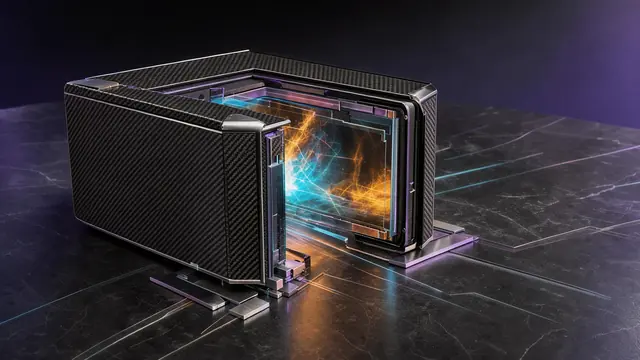
Google Adds TPU 8i Max and TPU 8tx to Its Eighth-Generation AI Chips: Giant Context and Confidential Computing
Google is expanding its eighth-generation TPU lineup with two new systems: TPU 8i Max, which packages two 8i chips into a single package for very long contexts, and TPU 8tx, which protects data and model weights during computation. No pricing, regions, or availability dates have been disclosed.

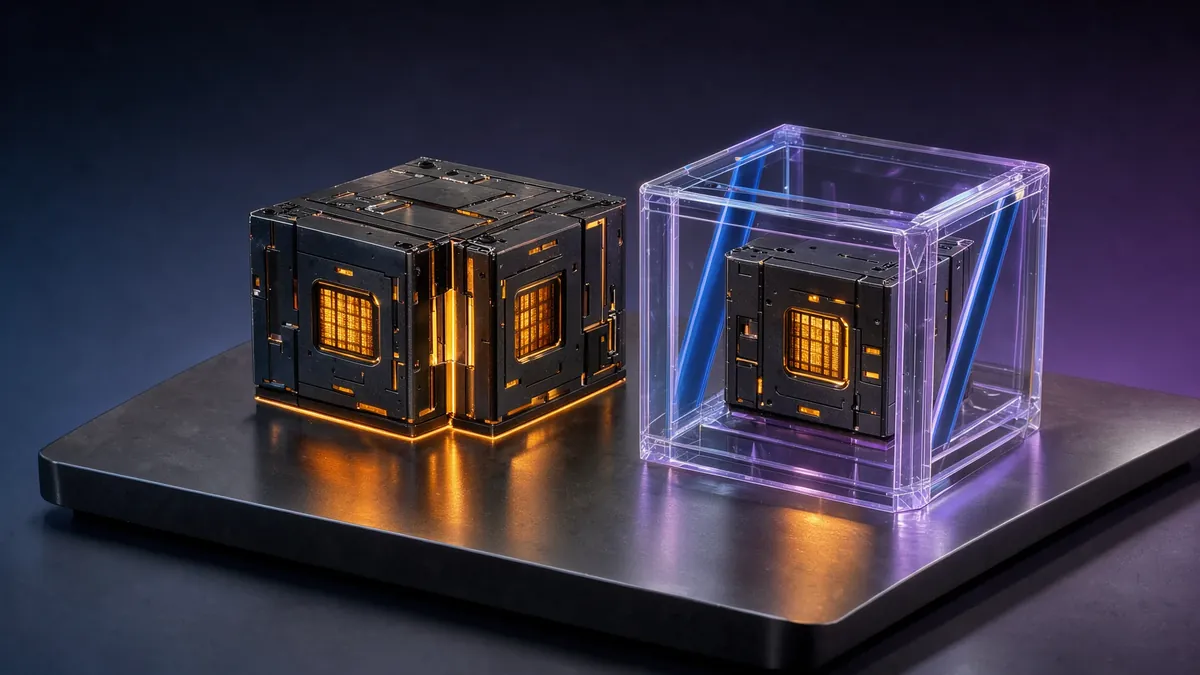
Google hasn’t designed a new chip, but it is rolling out two new machines from its existing silicon. This Monday, November 9, the company added TPU 8i Max and TPU 8tx to its eighth-generation AI accelerators in a blog post by Amin Vahdat, its chief technologist for AI infrastructure. The former targets massive context windows, while the latter focuses on sensitive data. Along with TPU 8t and TPU 8i, introduced in April, this brings the count to four TPU systems in a single year—a first, according to Google.
Two Configurations, Not Two New Chips
Google stresses the distinction: designing a chip takes years, whereas developing a system (how chips, memory, networking, and security are assembled) can be pulled off in a matter of months. Both newcomers therefore reuse existing silicon.
TPU 8i Max takes on the “memory wall.” When dozens of agents collaborate across an entire codebase or hours of video, memory bandwidth—rather than raw compute—becomes the bottleneck. Google addresses this by packing two TPU 8i chips into a single package, delivering twice the compute, SRAM, and HBM bandwidth of TPU 8i within the same rack footprint, resulting in more power per square meter and per watt. According to Network World, which interviewed Google Cloud’s Mark Lohmeyer, this configuration offers 384 GB of HBM, 17.2 TB/s of bandwidth, and 768 MB of SRAM; these figures do not appear in the official blog post.
TPU 8tx repurposes the chip from TPU 8t, designed for training, paired with 5th Gen AMD EPYC host processors. Its defining feature: confidential computing. Typically, data is encrypted at rest and in transit, but decrypted in memory during processing. TPU 8tx keeps data protected and isolated even during computation, including model weights. Google is pitching it to regulated industries and governments looking to run models and agents on their most sensitive data, and to perform fine-tuning, distillation, or reinforcement learning without moving that data. Leveraging TPU 8i’s low-latency network, Google claims up to 2x lower latency compared to TPU 8t.
Software: The Other Half of the Announcement
Alongside the hardware, Google rolled out a suite of software tools aimed at making its TPUs as frictionless to use as GPUs. It is open-sourcing TPU Sync, a layer that tiers model state (specifically the KV cache for long contexts) across chip memory, host memory, and storage, which Google says cuts time-to-first-token by over 90%. An open-source TPU agent suite, currently in preview, integrates with Claude Code, Cursor, and Google Antigravity to help migrate and optimize code. These are joined by the open-source XLA Serving Engine, the Agent Compute Engine software—which suspends idle agent sessions to free up chip resources—and the general availability of Cloud Pathways and dynamic slicing for TPU clusters on GKE, its managed Kubernetes service.
What’s Missing
Google provides no pricing, regions, or availability dates for either system. The cited performance improvements are internal measurements, with no published independent benchmarks. The company claims nearly 100 customers for its TPUs, including frontier AI labs, and promises to share more details during a livestream this Monday at 6:00 PM Paris time.
Our take
Google’s message is as much industrial as it is technical: proving it can spin up chip variations at the speed of customer demand, right where Nvidia still dominates the market. TPU 8i Max directly targets the surge in million-token contexts and long-running agents, whose costs are primarily dictated by memory. TPU 8tx opens up a segment that GPUs already address with confidential computing: banking, healthcare, and public sector workloads. Yet without pricing or a launch timeline, it is impossible to evaluate their real-world value proposition against rival offerings. The true gamble lies in the software: by making PyTorch and open inference engines first-class citizens on TPUs, Google is chipping away at the biggest incentive to stay locked into Nvidia.
Sources
- Google — Our newest TPUs: 8tx and 8i Max, built for the agentic era (November 9, 2026) Primary source
- Google Cloud on X — Meet TPU 8i Max and TPU 8tx Primary source
- Network World — Google targets AI's next infrastructure bottlenecks with two new TPUs (November 9, 2026) Secondary source
A primary source comes directly from the company, lab or organization concerned. A secondary source reports the information without being its author: we flag it as such. Spotted an error? See our corrections policy.