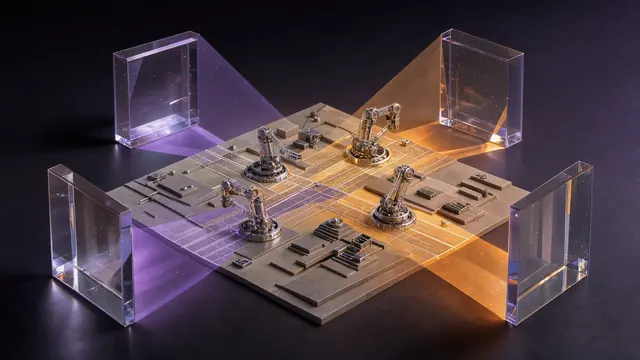
World Labs Launches Frameboy: Exploring Atlas in Real Time in the Browser at up to 15 Frames per Second
World Labs has launched Frameboy, a public demo that streams Atlas from the cloud at up to 15 fps in the browser, and integrates this live mode into Viewfinder (closed beta).


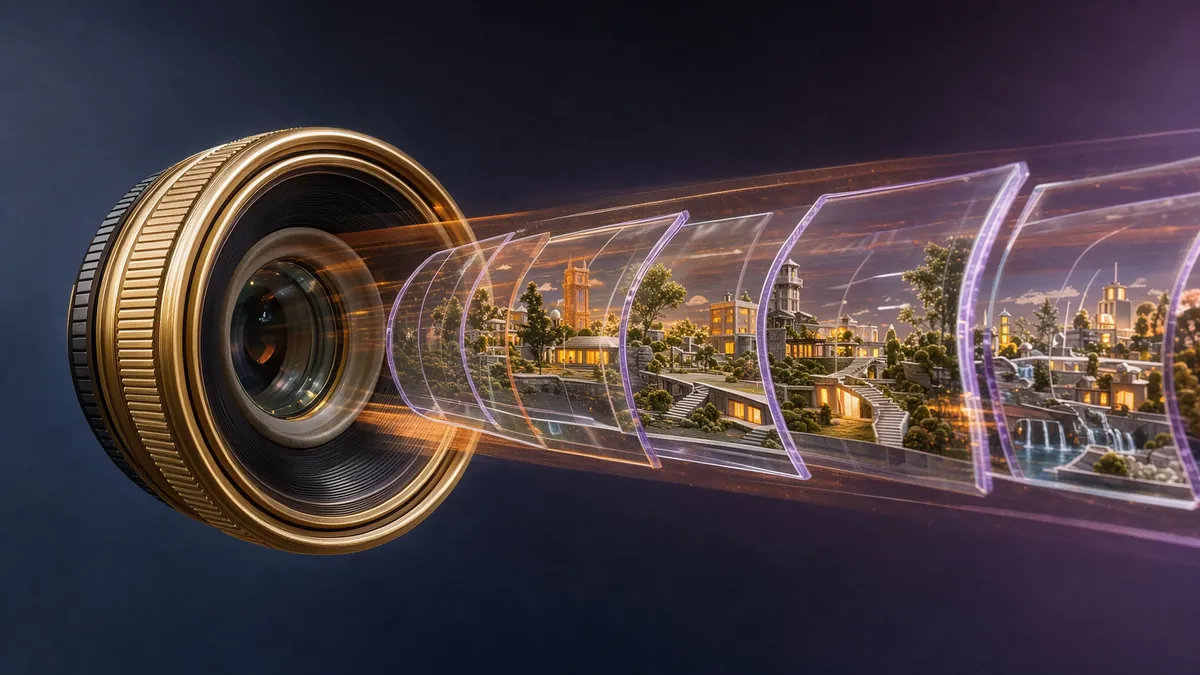
World Labs launched Frameboy on November 5, 2026, a public demo running an optimized variant of Atlas—its autoregressive world model—in real time in the browser. The announcement was published on the World Labs blog and on the @theworldlabs account; the demo can be accessed at frameboy.worldlabs.ai.
From on-Demand Generation to Continuous Streaming
Atlas, unveiled roughly two months earlier according to the same post, generates images one by one with camera control described as “pixel-perfect.” Until now, typical usage remained: set up camera viewpoints, launch a generation job, and wait. World Labs asserts that this latency—tens of seconds or minutes—hinders iteration.
Frameboy flips the loop: cloud GPUs deliver a stream of frames while the user moves the camera, reaching up to 15 frames per second according to the developer. The deployed variant is “highly optimized” for inference while preserving novel view synthesis. The demo scenes are curated; some stem from a single input image, while others rely on multi-view captures of real-world locations (the blog notably mentions recognizable landmarks).
Viewfinder: Building a Scene, Then Exploring It Live
World Labs also hooked this real-time mode into Viewfinder, a web application built around Atlas: users assemble a scene frame by frame (color and depth), and then activate a Frameboy overlay to explore it via live streaming. Viewfinder remains in closed beta; access is managed through the waitlist. The public Frameboy demo, meanwhile, is restricted to curated scenes.
Acknowledged Limitations
The post is transparent about the cost: Frameboy still requires a powerful cloud GPU server and “is not cheap” compared to local rendering. The 15 fps ceiling and visual quality remain claims made by the lab, with no third-party benchmarks provided in the announcement. The sample use cases (film location scouting, construction site inspection, game levels, robotics simulation) illustrate product intent; they do not document clients already running in production.
Our take
Frameboy does not introduce a new model: it alters the interaction paradigm surrounding Atlas. Shifting from a job queue to an interactive camera stream turns a world model into a near-generative renderer—provided users accept the cloud footprint and its associated cost. For creators and studios, the public demo primarily serves to test whether 3D consistency holds up under freeform camera movement; assessing its practical utility will require Viewfinder outside the waitlist and cost-per-minute figures, which were absent from the announcement. As it stands, it represents a clear step toward navigable world models, though not yet a day-to-day production tool.
Sources
- World Labs — Frameboy: Atlas in Real-time (blog, November 5, 2026) Primary source
- World Labs — Frameboy Demo Primary source
- World Labs (X) — Frameboy Announcement Primary source
- World Labs — Viewfinder / Atlas Waitlist Primary source
A primary source comes directly from the company, lab or organization concerned. A secondary source reports the information without being its author: we flag it as such. Spotted an error? See our corrections policy.