World Labs Opens Atlas to Everyone: Create a 3D World from a Photo and Export to Mesh, With No Public Pricing
One week after its Frameboy demo, World Labs is opening its Atlas world model to the public alongside two web apps, Viewfinder and Chisel, mesh conversion and relighting tools, and a full API built for coding agents. No pricing has been disclosed.


A week ago, World Labs, Fei-Fei Li’s startup, showed with Frameboy that users could walk in real time through worlds generated by its Atlas model—though only within pre-selected scenes, as creation remained restricted to a closed beta. On November 12, the company took the next step: Atlas is now open to everyone, featuring applications to build custom scenes and a complete API.
Four Tools, from a Photo to a Usable 3D Asset
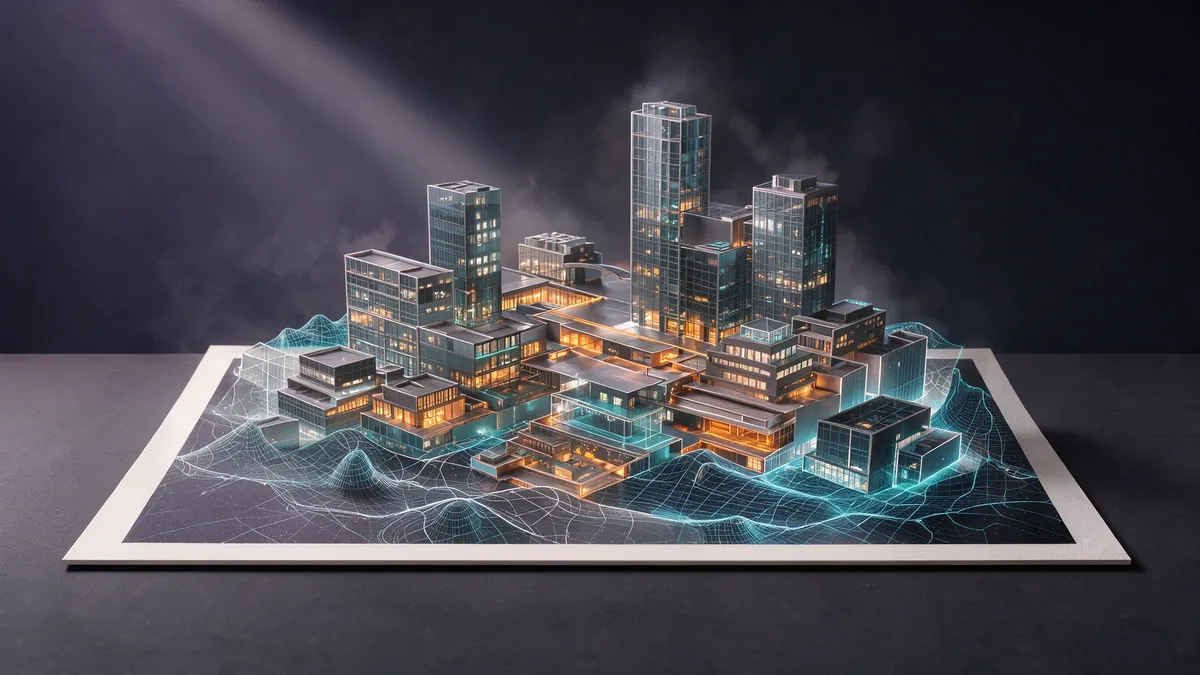
The Atlas page highlights four tools. Viewfinder starts from images: a single photo is enough to generate an entire world, while up to 64 photos can reconstruct a real-world location. Users can then move the camera, plot paths, and export images, videos, or Gaussian “splats”—a 3D representation based on colored point clouds. Chisel takes the opposite approach: users first build a rough layout of the scene (walls, volumes, object placements) using text or reference images, and each view updates dynamically whenever an element is moved. Splats to Mesh turns splats into polygonal meshes—the standard format used by game engines and 3D software—while Relight allows users to adjust scene illumination.
This shift to meshes fundamentally changes how the technology can be used. Until now, an Atlas world could only be viewed; now, it can enter a standard production pipeline: rough blocking in Chisel, generation through Atlas, mesh conversion, and subsequent import into Blender (highlighted as an integration) or a game engine. World Labs is explicitly targeting visual effects and filmmaking, architecture, and robotics.
An API Designed for Agents
The other major addition is the public rollout of “all the APIs” powering Viewfinder and Chisel. The documentation primarily caters to coding agents: a CLI and installable “skills” for Claude Code, Codex, or Cursor, allowing users to ask in natural language to “make a video that flies through this photo’s scene” or “turn this photo into a 3D scene.” API keys are managed per project, complete with project-level spending caps.
The question of cost remains unanswered. Neither the launch page nor the documentation reviewed on November 13 lists pricing, quotas, or a free tier. No release of model weights has been announced: Atlas is accessible exclusively through World Labs’ applications and API. Furthermore, the company offers no details regarding the quality of the generated meshes, even though this will ultimately determine whether these scenes can be used as-is or merely as rough starting points.
Our take
In just over two months, Atlas evolved from a research demo (September 1) to a real-time walkthrough (November 5), and now to a publicly available product (November 12). The strategy is clear: turn world generation into an active link in the 3D pipeline rather than a visual novelty, and let agents orchestrate that pipeline. For studios, architectural firms, and robotics teams, the value for previsualization and background sets is substantial. Yet without public pricing or mesh quality benchmarks, calculating the return on investment is impossible: teams must run tests on real-world projects with strict spending caps before committing. This pricing silence, unusual for a general-availability launch, remains the primary factor to watch.
Sources
- World Labs — Atlas (launch page, November 12, 2026) Primary source
- World Labs on X — “We're opening up access to Atlas to everyone today” (November 12, 2026) Primary source
- World Labs on X — Viewfinder, up to 64 input images (November 12, 2026) Primary source
- World Labs — Research & Insights (blog: Atlas on September 1, Frameboy on November 5, Atlas launch on November 12) Primary source
- World Labs — Atlas API documentation, Quickstart Primary source
A primary source comes directly from the company, lab or organization concerned. A secondary source reports the information without being its author: we flag it as such. Spotted an error? See our corrections policy.